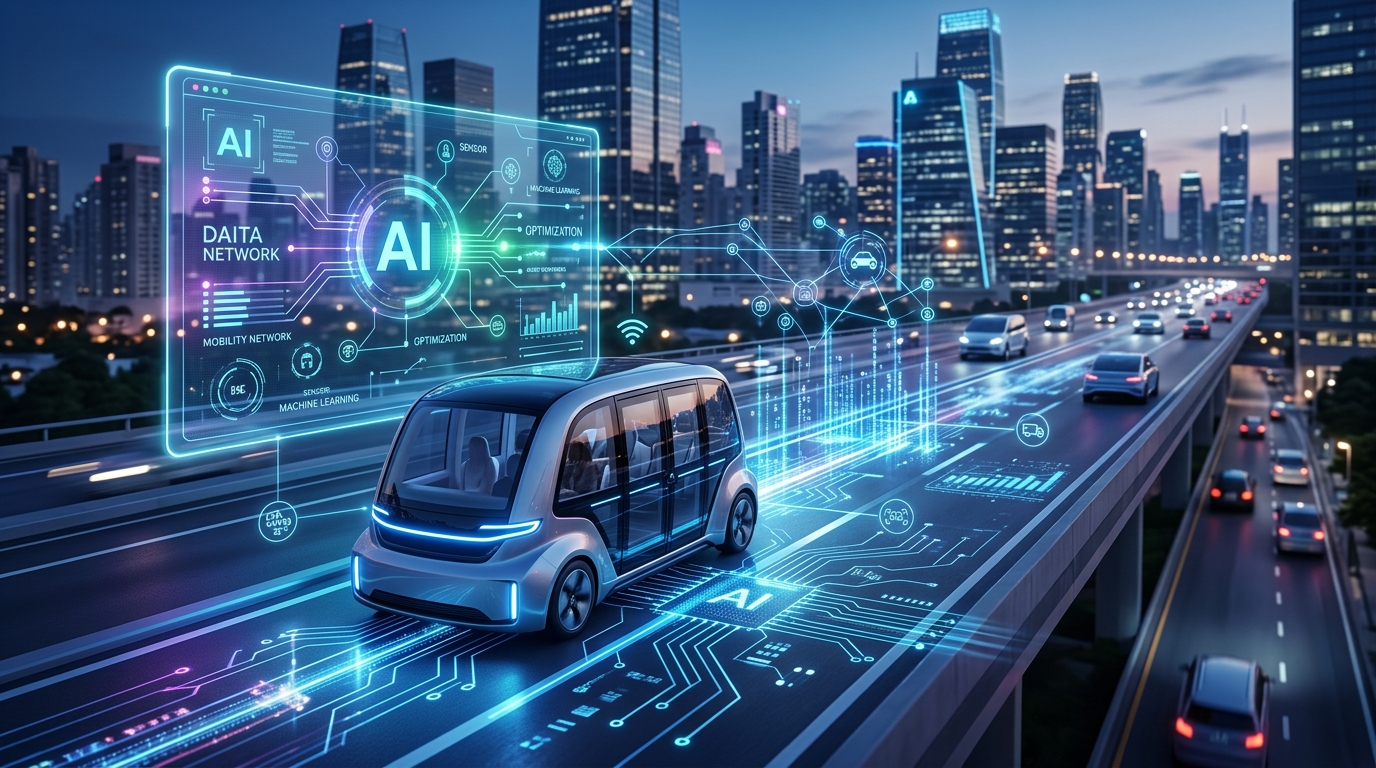

AI Is in the Driver’s Seat: How Artificial Intelligence is Redefining Transportation
Welcome back to TechCrunch Mobility, your hub for the future of transportation and now, more than ever, how AI is playing a part. When most people hear “AI and cars,” their minds immediately jump to fully autonomous vehicles navigating busy city streets. While self-driving cars are undoubtedly a massive part of the story, they represent just the most visible tip of a colossal iceberg. The true revolution of AI in transportation is deeper, more pervasive, and is already reshaping how we move, ship goods, and manage our infrastructure.
Artificial intelligence is becoming the foundational operating system for the entire mobility ecosystem. It’s not just a feature; it’s the engine powering a paradigm shift from reactive to predictive systems, creating a smarter, safer, and vastly more efficient world of movement.
Beyond the Autonomous Vehicle: The Unseen AI at Work
The focus on Level 5 autonomy often overshadows the immediate impact AI is having right now. Long before our cars drive themselves, AI is acting as the invisible hand optimizing the networks they drive on.
Smartening Up Our Cities
Gridlock is the bane of every modern city. Today, AI-powered traffic management systems are ingesting massive amounts of real-time data from cameras, road sensors, and GPS signals. These platforms don’t just react to traffic jams—they predict them. By analyzing flow patterns, weather conditions, and public events, AI can anticipate congestion and proactively reroute traffic, adjust traffic light timing, and dispatch resources to prevent bottlenecks before they form. This leads to reduced commute times, lower fuel consumption, and a significant cut in urban emissions.
Revolutionizing Logistics and Delivery
The journey of a product from a warehouse to your doorstep is a complex dance of logistics, and AI is its new choreographer. In fulfillment centers, AI-guided robots sort and move packages with superhuman speed. For shipping, AI algorithms calculate the most efficient routes for truck fleets, factoring in traffic, fuel costs, and delivery windows. The rise of autonomous trucking and last-mile delivery drones is the next frontier, promising to further streamline a supply chain that is increasingly reliant on the predictive power of AI in transportation.
Personalizing Every Journey
AI is not just optimizing systems from a macro level; it’s also making every individual trip more seamless and tailored to our needs. The technology is shifting from a tool for infrastructure to a personal mobility concierge.
The Rise of Predictive Mobility
If you’ve used an app like Uber or Lyft, you’ve experienced AI in action. These platforms use machine learning to:
- Predict Demand: Forecast where and when rides will be needed, allowing them to position drivers proactively.
- Optimize Pricing: Implement dynamic pricing to balance supply and demand.
- Calculate ETAs: Provide remarkably accurate arrival times by analyzing current traffic and historical data.
This extends to the broader concept of Mobility-as-a-Service (MaaS), where AI-powered platforms integrate public transit, bike-sharing, scooters, and ride-hailing into a single, intelligent service that suggests the optimal travel combination for any journey.
The In-Cabin Co-Pilot
Inside the vehicle, AI is transforming the user experience. Advanced driver-assistance systems (ADAS) use AI to interpret sensor data for features like adaptive cruise control and automatic emergency braking. Meanwhile, sophisticated in-car assistants and driver monitoring systems use AI to detect drowsiness, ensure focus, and provide a voice-activated, personalized infotainment experience. The car is no longer just a mode of transport; it’s becoming a responsive, intelligent environment.
The Roadblocks Ahead
Of course, this tech-fueled journey isn’t without its challenges. The integration of AI in transportation raises critical questions about data privacy, cybersecurity, and ethical decision-making. As vehicles become more connected, they become more vulnerable to cyberattacks. Furthermore, the ethical dilemmas of autonomous decision-making—the classic “trolley problem”—are no longer theoretical. Crafting regulations that can keep pace with rapid technological advancement while ensuring public safety remains a monumental task for governments worldwide.
Ultimately, the impact of artificial intelligence on mobility is undeniable and accelerating. It’s the invisible force optimizing our supply chains, clearing up our commutes, and making our vehicles safer and more intuitive. While the fully autonomous future captures our imagination, the real story is that the AI revolution is already here, working quietly under the hood to redefine what it means to move.