
Iceland’s EU Referendum: A Pivotal Moment for the Island Nation
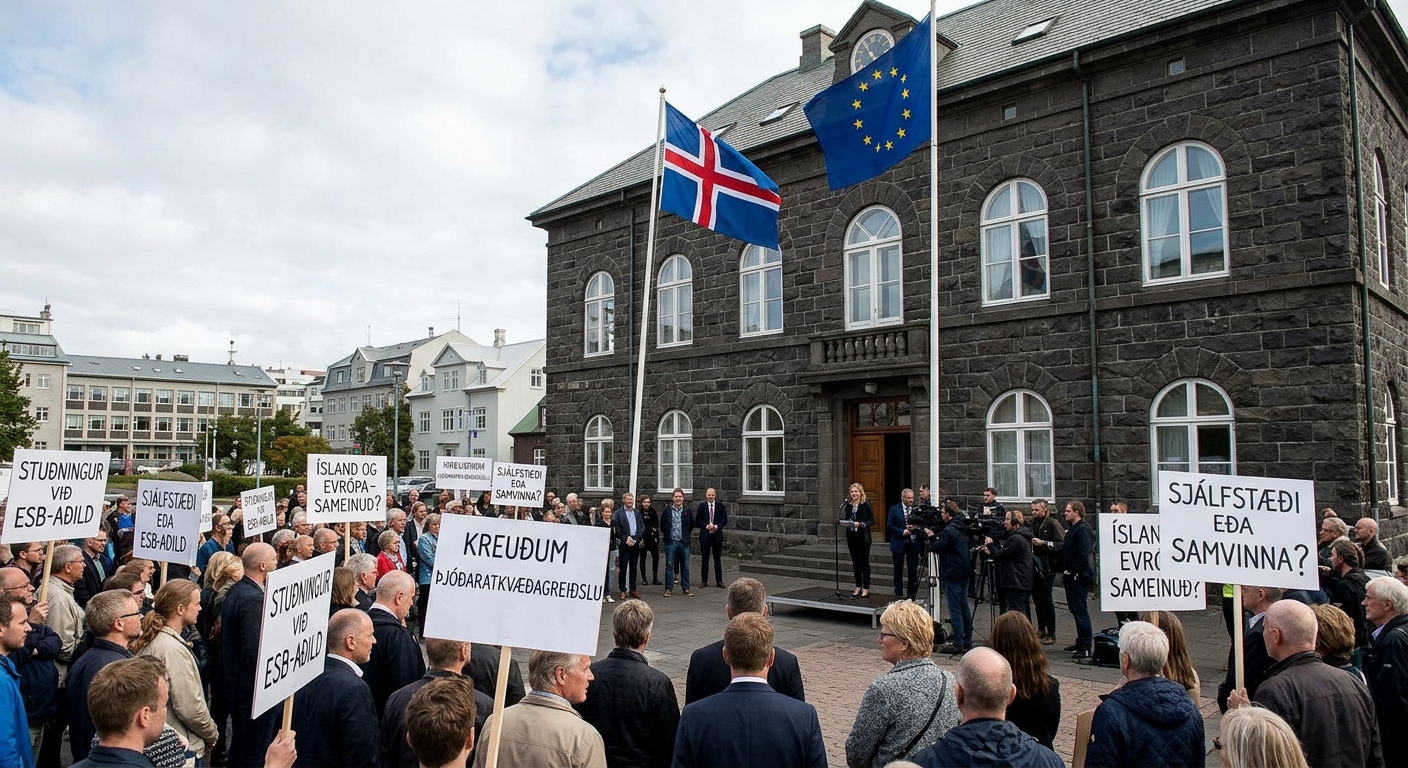
Iceland stands at a crossroads, with its parliament recently making a landmark decision that could redefine its geopolitical future. In a significant vote, the Icelandic parliament approved a plan to hold a national referendum on August 29. The purpose of this referendum is to decide whether the nation should officially begin European Union accession talks, signaling a potential shift towards closer integration with the 27-nation bloc. This move marks a crucial step in a two-stage process that could see the North Atlantic island nation join the EU later this decade.
The Road to the Referendum: A Two-Step Plan
The parliamentary vote reflects a measured approach by the Icelandic government. Instead of a direct vote on full membership, the August 29 referendum will gauge public appetite for merely starting formal negotiations. This two-step strategy allows for a more gradual process, enabling the public to first decide on opening the dialogue, and then, if negotiations prove successful, potentially voting on a final membership deal in the future.
This approach acknowledges the deeply divided public opinion in Iceland regarding EU membership. For decades, the question of joining the European Union has been a contentious issue, balancing potential economic benefits against deeply held concerns about national sovereignty, particularly over the country’s vital fishing grounds. The upcoming referendum provides a clear mechanism for the Icelandic populace to voice their initial stance on this long-debated topic.
A History of Hesitation and Hope
Iceland’s relationship with the European Union (and its predecessors) has been complex. While enjoying strong economic and political ties with Europe through its membership in the European Economic Area (EEA) and the Schengen Agreement, full EU membership has consistently been a stumbling block. The core of this hesitation lies in Iceland’s unique economic structure, heavily reliant on its fisheries.
Iceland’s robust fishing industry is seen by many as non-negotiable, with fears that EU membership would lead to a loss of control over these critical resources. Furthermore, a strong sense of national identity and sovereignty has often swayed public opinion away from closer integration. However, the global financial crisis of 2008, which severely impacted Iceland, briefly ignited a stronger interest in EU membership as a potential safeguard for economic stability. Initial European Union accession talks began in 2009 but were later put on hold in 2013 by a eurosceptic government, which effectively froze the application process.
Potential Benefits of EU Membership for Iceland
Should Iceland proceed with European Union accession talks and ultimately join the bloc, several benefits could emerge:
- Economic Stability: Membership could provide greater economic stability, access to a larger single market, and potentially shield the nation from future financial shocks.
- Political Influence: As a full member, Iceland would gain a seat at the decision-making table within the EU, allowing it to influence policies directly affecting its interests.
- Diversification: Access to the EU’s vast internal market could encourage diversification of the Icelandic economy beyond its traditional pillars of fishing and tourism.
- Strengthened Rule of Law: Alignment with EU legal frameworks could further strengthen democratic institutions and rule of law standards.
Challenges and Concerns
Despite the potential advantages, the path to EU membership is fraught with challenges and concerns for Iceland:
- Fisheries Policy: This remains the most significant hurdle. The Common Fisheries Policy (CFP) is central to the EU, and Iceland would likely have to cede some control over its fishing quotas and management, a prospect many Icelanders oppose vehemently.
- Loss of Sovereignty: Joining the EU involves transferring certain powers to supranational institutions, which raises concerns about national sovereignty and the ability to make independent decisions.
- Agricultural Policy: While not a major agricultural producer, Iceland would need to integrate into the EU’s Common Agricultural Policy (CAP), which could have implications for its small farming sector.
- Financial Contributions: As a net contributor, Iceland would be required to contribute to the EU budget, a cost that some argue might outweigh the benefits.
What Lies Ahead?
If the August 29 referendum results in a “yes” vote, it would greenlight the resumption of formal European Union accession talks. These negotiations are typically a lengthy and complex process, covering 35 “chapters” of EU law and policy, ranging from economic and monetary policy to environmental protection and foreign affairs. Each chapter must be successfully negotiated and implemented into national law before membership can be finalized.
The outcome of this referendum is not just significant for Iceland but also for the European Union, which would gain a stable, democratic, and strategically located member with rich natural resources, particularly in renewable energy. As the clock ticks towards August 29, the eyes of both Iceland and Europe will be on the island nation, awaiting a decision that could reshape its destiny for generations to come.